How to Read Opponents in Live Tournament Poker
In live tournament poker, the cards you hold are only half the story. The real edge comes from reading the humans sitting across the felt — and that skill can be learned.
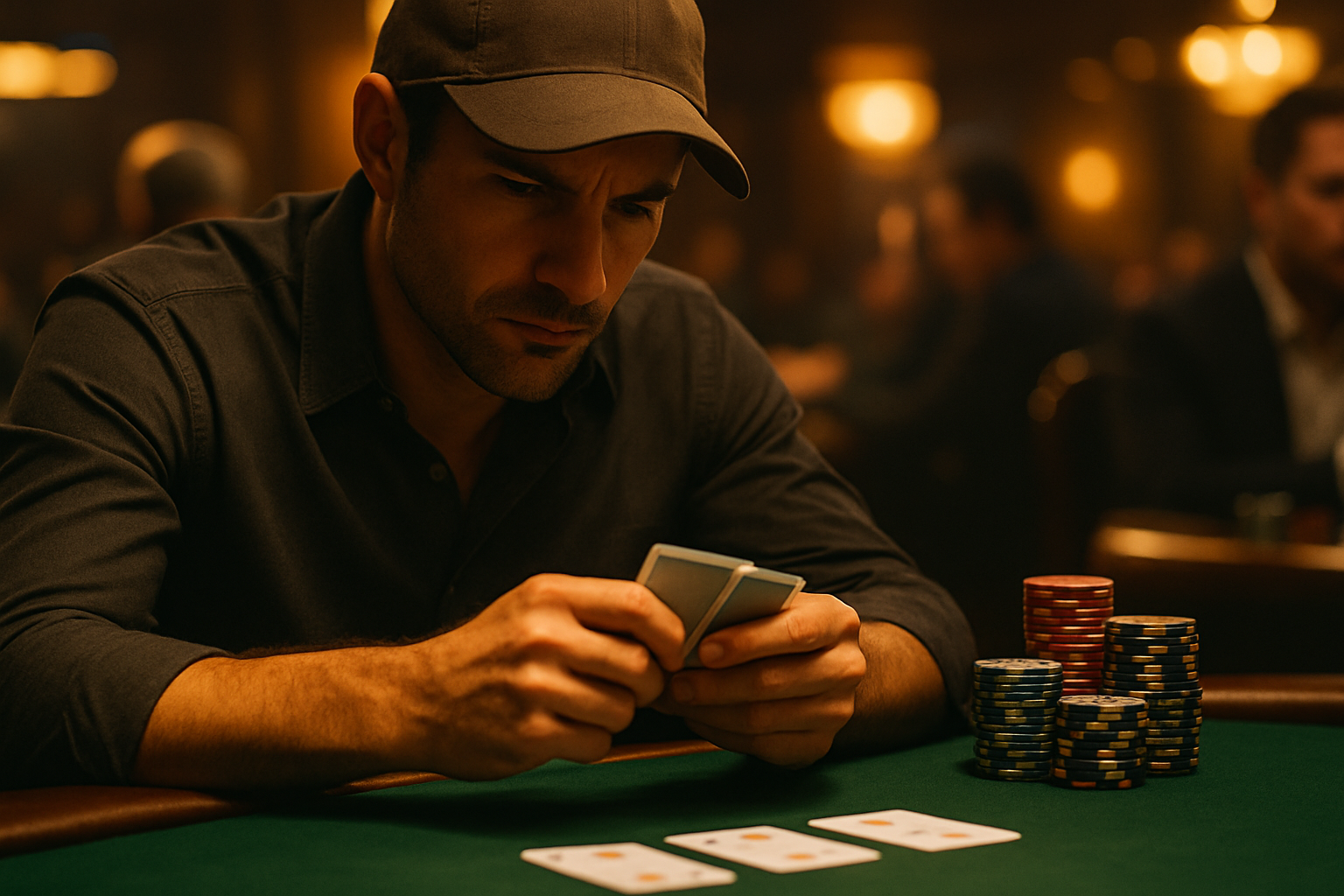
There's a reason seasoned pros say that poker is a game played against people, not cards. Anywhere you sit down at a live tournament — whether it's a modest daily at the Rio side room or a packed main event Day 1 — the ability to gather information from your opponents is one of the most valuable weapons you can carry. No HUD, no solver, just your eyes, your instincts, and a disciplined thought process.
Let's break down how to sharpen those reads and actually put them to work at the table.
Why Live Reads Matter More Than Ever
Online poker has trained a generation of players to rely on stats and population tendencies. That's powerful — but it creates a blind spot. When you sit down in a live tournament, especially something as intense as a WSOP event, the physical dimension returns with full force. Body language, timing, chip handling, eye contact — all of it is suddenly on the table.
Players who migrate from online to live often leave significant value behind simply because they haven't developed the habit of observing. The good news? You don't need to be a mentalist. You just need a structured approach.
Start Before the Hand Even Begins
The best live players are reading the table constantly, even when they've folded. Use every hand you're not involved in as a data-collection session. Ask yourself:
- Does this player look comfortable or tense when they look at their hole cards?
- How do they handle their chips when they're bluffing versus when they have a strong hand?
- Do they make eye contact with the dealer, the board, or their opponents after the flop?
- How quickly do they act — and does that timing change in big spots?
None of these observations are ironclad tells on their own. But patterns build over time. By the time you're deep in a session, you'll have a rough psychological profile of every player at your table. That's an enormous edge.
Betting Patterns: The Most Reliable Signal
Physical tells get all the glory, but betting patterns are actually where the money lives. Most recreational players — and even many regulars — have consistent tendencies that reveal the strength of their hand.
Pay attention to:
- Sizing inconsistencies: Does someone bet small when they're strong and large when they're bluffing? Or the opposite? Identify their baseline and look for deviations.
- The check-raise frequency: Some players only check-raise with the nuts. Others use it as a bluff. Know which type you're facing before you call off your stack.
- Bet timing on the river: A fast bet on the river often signals either a strong hand or a polarized bluff — both cases where calling with a marginal hand is risky.
- Limping versus raising ranges: In live tournaments, players who limp frequently tend to play more passively overall. That's exploitable.
The key is not to assume — it's to observe and confirm over multiple hands before you trust a read enough to build a major decision around it.
Physical Tells: What's Real and What's Noise
Hollywood loves the "poker tell" — the trembling hand, the nervous glance. In reality, most physical tells are far subtler, and many are unreliable without context. That said, a few categories are worth monitoring:
Genuine relaxation vs. forced calm. A player who has a big hand often becomes very still — they're trying not to give anything away. Conversely, a player with nothing may overperform confidence through exaggerated gestures or banter.
Breathing and posture. Shallow breathing or a slightly forward lean after a big bet can indicate genuine excitement — which often correlates with a strong holding. Again, establish the baseline first.
Chip handling. Nervous chip shuffling when facing a bet is different from casual shuffling between hands. Notice what changes.
The golden rule: one observation means nothing. A pattern of observations across multiple hands means everything.
Adjusting to Different Player Types
Reading your opponents also means adapting your own strategy based on what you've learned. A few broad profiles you'll encounter at the WSOP and similar events:
- The recreational tourist: Plays for fun, loves to see flops, calls too much. Don't bluff them — extract maximum value with your strong hands.
- The tight-aggressive regular: Respects position, plays a balanced range. Your reads need to be more refined here. Look for timing tells and sizing patterns.
- The loose-aggressive bully: Attacks weakness constantly. Pick your spots to trap, and don't let them rattle you into making emotional decisions.
- The over-cautious nit: Folds too much. Bluff them more frequently, especially in spots where the board is scary.
Every table is different, and the lineup shifts as players bust or move. Stay observant throughout — don't get comfortable with a read you made three levels ago.
Putting It All Together During a Long Tournament Day
Live tournament sessions are marathons. At the WSOP, you might be playing eight to twelve hours in a single day. Fatigue affects everyone — including your opponents. Players tend to become more predictable as the session wears on, their discipline eroding under exhaustion. That's when your reads become most valuable.
Take notes between hands. Even a few mental tags — "bluffs rivers with large bets," "slows down when weak" — are incredibly useful when a big spot arrives on Day 2.
And if you're tracking your tournament sessions during a summer in Vegas, tools like MTTrack can help you log your results, monitor your bankroll, and stay organized across multiple events. Keeping that data sharp means you can focus your mental energy where it counts — at the table, reading the players in front of you.
The Edge Is Always Human
Solvers can show you optimal play in a vacuum. But the real edge at a live poker table has always been human intelligence — the ability to watch, adapt, and respond to the specific people sitting across from you. That skill doesn't come from software. It comes from deliberate practice, session after session.
Next time you sit down in a tournament, make a conscious decision: fold more hands than you need to in the early levels, and spend that time studying your table. The information you gather could be worth far more than any marginal hand you would have played.
The cards will come. Make sure you're ready when they do.
On MTTrack
Read also
Playing the tournaments in Vegas this summer?
Track your results, your bankroll and the WSOP schedule with MTTrack.
Discover MTTrack